Litoranea Santa Maria di Leuca, Castrignano del Capo, Lecce, Salento, Puglia
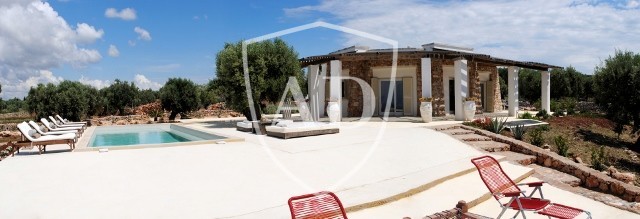
For sale on the coastroad Leuca – San Gregorio, Villa with pool and outbuilding, called “le Pajare Francesi”. They represent the temple of charm combined with total well-being. Surrounded by a natural environment with typical Mediterranean tones.
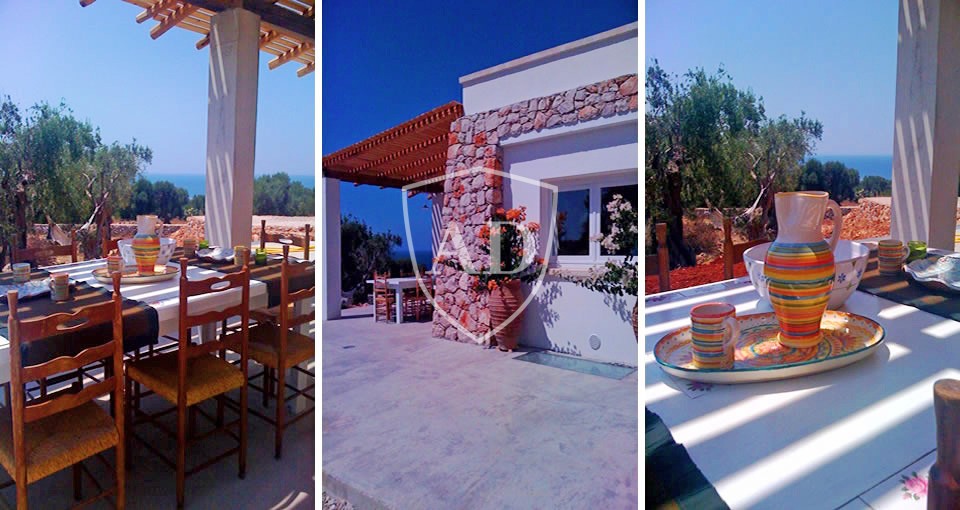
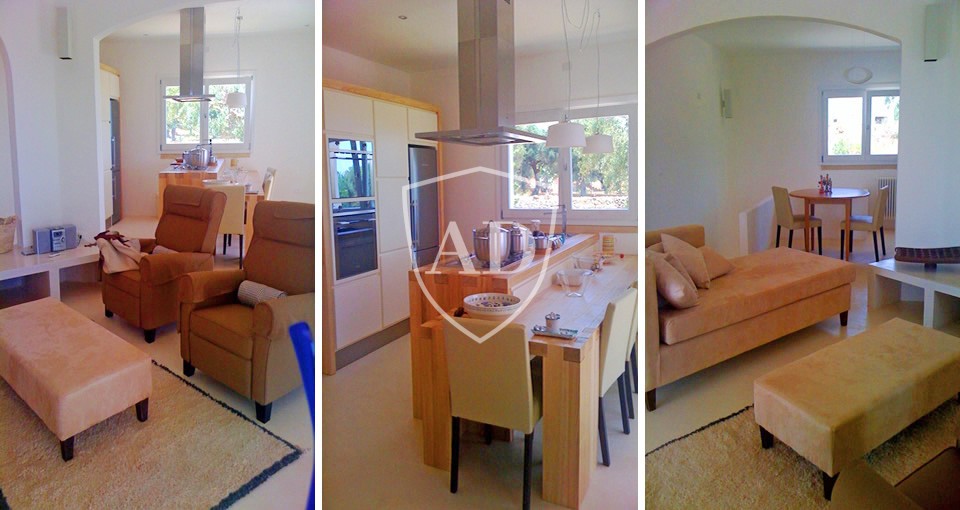
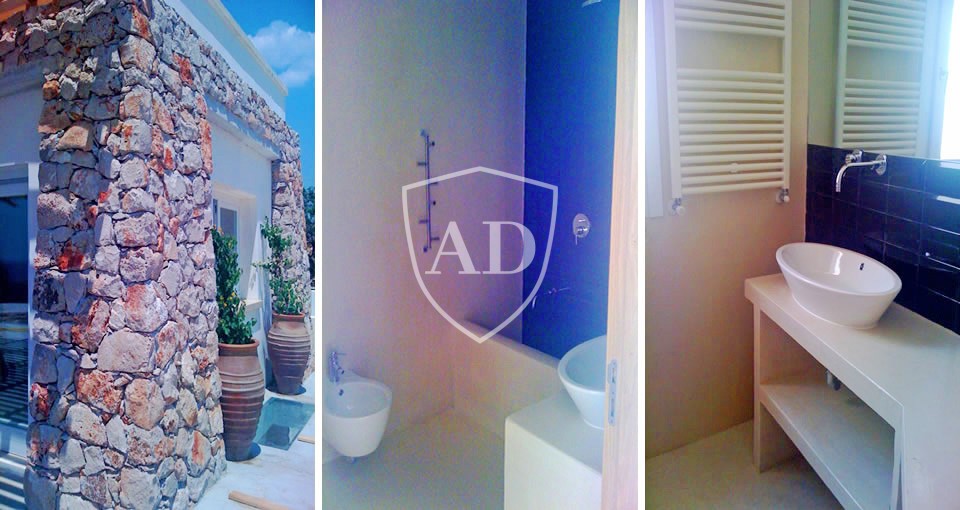
The villa with swimming pool is located on a plot of about 7000 square meters, enriched by a refined path of dry stone walls. Essential and minimal in style, the lively outdoor furniture, softened by the light canopies that carefully reflect the fluid lines of the pajare. An environment that lends itself to the most complete welcome of the guest. The greater pajara is on two levels: the upper floor is accessed through the large sliding windows that from the outside let you see the true soul of the villa. The open-plan living area, in which the living room, the dining room and the innovative kitchen, embellished with decorative elements of clear minimalist imprint, are bright. An elegant internal staircase leads to the lower floor, consisting of the 3 bedrooms well located and served by two of the three bathrooms. From here, a short corridor guides the guest in a pleasant courtyard, ideal for sharing outdoor moments of relaxation.
Not far from the villa with swimming pool, there is the “dependance” which takes up the structure and design of the same. Outside a cool pergola offers comfort and pleasure. An ideal place to rest in the silence of outdoor spaces in the dependance. An internal staircase connects the ground floor to the lower floor. Composed of 1 double Bedroom with Bathroom/ shower. In the center Villa and the annex, there is the swimming pool.
The Villa with Swimming pool and dependance is located on the coast Leuca – San Gregorio
The location
The town of Patù is 126 kilometers from the Airport of Salento (Brindisi). The small village is located at the extreme edge of Capo di Leuca, at the foot of the hill of Vereto.
According to historians, the name Patù derives from the Greek pathos (suffering, pain). In fact, it would remember the suffering of the city of Vereto (Veretum), destroyed by the Saracens, from which the village was born. Among the most important historical sites we mention the archaeological one with the remains of the Messapian city of Vereto, “the Centopietre” and the staircase and the Messapian port in the Bay of San Gregorio, marina di Patù, only 4 kilometers away from it.
Vereto is an ancient Messapian city located a short distance from the town. It is located on a small hill. The city was an important center for trade, both with Greece and with Magna Grecia. It became a Roman municipality and then was razed to the ground in the ninth century by the Saracens. Of this center remain some monumental testimonies as the foundations of the walls that encircled the city and several burials.
In the Bay of San Gregorio, marina of Patù, and distant from it only 4 kilometers, once there was the port of the city of Vereto. On the spot, in fact, the remains of a staircase of Messapian origin and well for the supply of fresh water are still visible.
The Centopietre is an ancient funerary monument, declared National Monument of second class in 1873. Dating back to the ninth century, it was built to bury the remains of the Geminian knight. Messenger of peace killed by the Saracens just before the final battle of June 24, 877, between Christians and Muslims. The rectangular structure is built with 100 blocks of limestone from the Messapian city of Vereto. Inside it has several overlapping layers of frescoes on sacred subjects dating back to the fourteenth century.
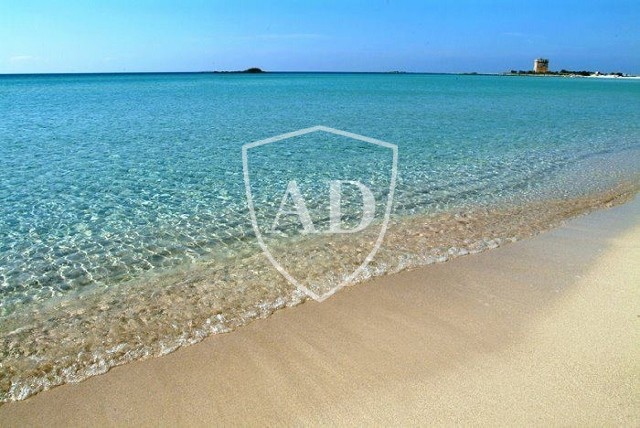
Patù overlooks the Ionian Sea for about 3 km with the resorts of Felloniche and Torre San Gregorio (seaside resort that houses various accommodation facilities). The entire municipal area is subject to landscape constraints for the natural composition characterized by Mediterranean scrub and local essences and for the presence of ancient monuments of inestimable aesthetic and traditional value as the pajare. Important is the presence of flora typical of the place as the Alisso di Leuca, thyme, myrtle and various species of wild orchids.